
Achieving perfect home comfort without skyrocketing energy bills is a balancing act—and your HVAC system is the linchpin. By optimizing how you heat, cool, and ventilate your home, you can cut utility costs, shrink your carbon footprint, and enjoy a consistently cozy living space year-round. In this comprehensive guide, we’ll walk through 10 proven strategies that transform your HVAC system into an energy-sipping powerhouse.
1. Perform a Home Energy Audit
Before diving into upgrades, get the lay of the land with a professional or do-it-yourself home energy audit. This assessment pinpoints:
- Air leaks around windows, doors, and duct joints
- Insulation gaps in walls, attics, and crawl spaces
- Inefficient equipment (old furnace, low-SEER AC)
- Thermostat setbacks and usage patterns
An audit gives you a prioritized action plan: seal the worst leaks first, then target insulation or equipment upgrades. Many utility companies even offer free or discounted audits—check your local incentives.
Read Also: 10 Genius Home Hacks That’ll Save You Hundreds This Year
2. Seal and Insulate Ductwork
Up to 30% of heated or cooled air can be lost through leaky ducts before it reaches your living space.1 Ensuring airtight, well-insulated ductwork is one of the highest-ROI HVAC improvements:
- Locate leaks by running the system and feeling for escaping air along ducts.
- Seal gaps with UL-listed foil tape or mastic sealant (avoid cloth duct tape—it fails).
- Wrap ducts with R-8 or higher insulation sleeves, especially in unconditioned attics, basements, and crawl spaces.
With ducts properly sealed and insulated, your blower can deliver conditioned air more efficiently, translating directly into lower energy bills.
3. Install a Smart or Programmable Thermostat
Your thermostat is the brain of your HVAC system—give it an upgrade:
- Programmable models let you set temperature schedules for weekdays, weekends, and vacation modes.
- Smart thermostats (e.g., Nest, Ecobee) learn your routines, detect when the home is empty, and automatically adjust setpoints for maximum savings—often 10–12% off heating and 15% off cooling costs.2
- Zone control via Wi-Fi-enabled dampers allows different rooms to run at different temperatures, avoiding waste in unoccupied areas.
Proper temperature setbacks—lowering to 18–19 °C (64–66 °F) in winter while you sleep and raising to 26–27 °C (78–80 °F) in summer—can shave 5–15% off your annual bill with minimal comfort impact.
4. Upgrade to High-Efficiency Equipment
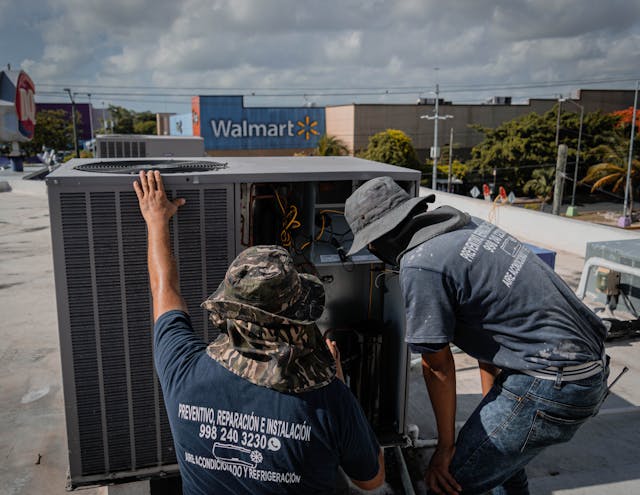
If your furnace or central air conditioner is over 10 years old, it’s likely underperforming:
- High-SEER AC units (Seasonal Energy Efficiency Ratio of 16 or above) use advanced compressors and variable-speed fans to cool more efficiently and maintain steadier temperatures.
- High-AFUE furnaces (Annual Fuel Utilization Efficiency of 90%+) convert nearly all the fuel’s energy into heat, compared to 60–70% for older models.
- Heat pumps provide both heating and cooling by transferring heat rather than generating it—ideal for moderate climates and capable of 300–400% efficiency.
Though equipment replacement involves upfront investment, incentive programs, rebates, and long-term energy savings often yield a payback period of 3–7 years.
5. Optimize Airflow and Ventilation
Good airflow is essential for efficiency and indoor air quality:
- Keep registers clear of furniture and rugs to prevent airflow blockages.
- Balance dampers in ductwork to ensure each room gets its fair share of heated or cooled air.
- Use energy-recovery ventilators (ERVs) or heat-recovery ventilators (HRVs) to exchange stale indoor air for fresh outdoor air while capturing up to 70% of the energy from exhaust air.3
Balanced ventilation reduces the load on your HVAC system by pre-conditioning incoming air and maintaining consistent humidity levels.
6. Embrace Regular Maintenance
Routine tune-ups keep your system running at its peak:
| Task | Frequency | Benefit |
|---|---|---|
| Replace air filters | Every 1–3 months | Improved airflow, 5–15% energy savings |
| Clean evaporator/condenser coils | Annually | Restored heat transfer efficiency |
| Check refrigerant charge | Annually | Prevents compressor damage |
| Lubricate motors & bearings | Annually | Reduced friction, longer equipment life |
| Inspect electrical connections | Annually | Safety, prevents breakdowns |
Neglecting maintenance can raise energy use by 5–20% and shorten equipment life by years—just stick to scheduled check-ups.
7. Improve Your Home’s Building Envelope
Your HVAC works hardest on leak-prone building shells. Strengthening the envelope reduces load:
- Add attic insulation to reach R-49 or higher in cold climates, R-30–49 in moderate zones.
- Seal windows and doors with low-expansion spray foam or weatherstripping—focus on gaps over 3 mm wide.
- Upgrade to double- or triple-pane windows with low-E coatings to cut heat transfer by up to 50%.4
By reducing thermal losses, you shrink the heating and cooling demand that your HVAC must meet.
8. Utilize Ceiling Fans and Ventilation Fans
Sometimes, the best “HVAC” solution is a well-placed fan:
- Ceiling fans create a wind-chill effect, allowing you to raise AC setpoints by 2–4 °C without sacrificing comfort.
- Exhaust fans in kitchens and bathrooms remove moisture and pollutants at the source—reducing humidity loads on your dehumidifier or air conditioner.
Running a ceiling fan uses roughly 75 watts, versus several kilowatts for central air—making them an ultra-low-cost comfort enhancer.
9. Capture Off-Peak Electricity
If your utility offers time-of-use (TOU) rates, shift HVAC operation to off-peak periods:
- Pre-cool or pre-heat your home when rates are lowest, then allow the building’s thermal mass to coast through peak pricing hours.
- Programmable thermostats can automate this load-shifting for you.
By leveraging TOU pricing, you can reduce energy costs by 20–50% on the cooling or heating portion of your bill.
10. Monitor Performance and Embrace Smart Analytics
Knowledge is power—track your HVAC usage and optimize continuously:
- Smart meters and home-energy dashboards provide real-time feedback on consumption spikes.
- Cloud-based analytics (often bundled with smart thermostats) spot anomalies—like a failing blower motor—and trigger maintenance alerts before breakdowns occur.
- Monthly energy reports help you correlate temperature settings, weather patterns, and energy use to fine-tune schedules.
Ongoing monitoring ensures you maintain peak efficiency long after installation.
Putting It All Together
Implementing these 10 strategies in concert can slash your HVAC energy use by 30–50%, translating into hundreds or even thousands of dollars in annual savings. Here’s a sample roadmap:
- Month 1–2: Schedule a home energy audit and seal major duct leaks (Strategy 1 & 2).
- Month 3–4: Install a smart thermostat and set up temperature schedules (Strategy 3).
- Month 5–8: Upgrade insulation and seal gaps in your building envelope (Strategy 7).
- Month 9: Book seasonal maintenance with a licensed HVAC pro (Strategy 6).
- Month 10–12: Evaluate equipment age; plan for high-efficiency replacement or heat pump installation (Strategy 4).
- Ongoing: Use fans, leverage TOU rates, optimize ventilation, and monitor performance (Strategies 5, 8, 9, 10).
By phasing upgrades over a year and tapping into rebates or financing, you can spread costs and immediately start reaping efficiency dividends.
FAQs About Energy-Efficient HVAC
Q: How much can I save by replacing my 10-year-old AC?
A: Upgrading from a SEER 10 to SEER 18 unit can cut cooling bills by up to 40%, saving roughly $300–$500 annually for an average home.
Q: Do I really need a professional for duct sealing?
A: DIY sealing can help, but a certified technician uses pressure-testing (duct blaster) to find hidden leaks and ensure comprehensive sealing.
Q: What’s the ideal HVAC temperature setpoint?
A: Aim for 18–19 °C (64–66 °F) in winter when you’re home, raising by 3–4 °C when away or asleep. In summer, target 24–26 °C (75–78 °F) for cooling, with similar setbacks.
Conclusion
Energy efficiency isn’t just a buzzword—it’s the key to sustainable, cost-effective home comfort. By following this Ultimate HVAC Guide, you’ll harness simple tweaks and smart technologies to dramatically lower your bills, improve indoor air quality, and extend the life of your equipment. Whether you’re a DIY enthusiast or prefer to partner with licensed professionals, each of these 10 strategies delivers measurable results.
Ready to transform your HVAC system? Start with an energy audit, tackle the most urgent upgrades, and watch your savings grow—one degree (and one dollar) at a time.
Top Articles