
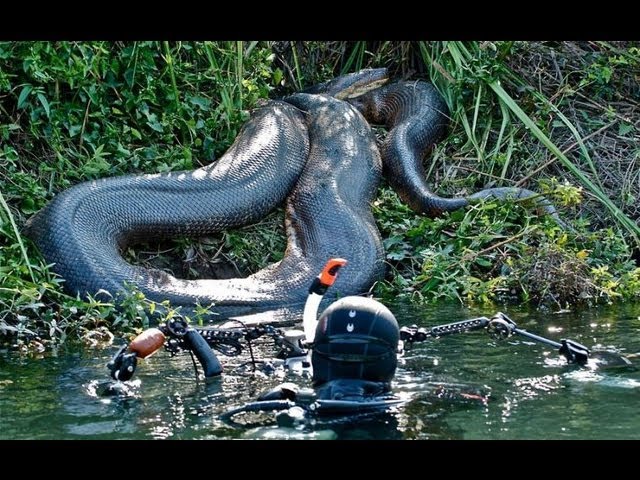
Deep in the emerald labyrinth of the Amazon rainforest—where sun-dappled waters weave between ancient cypress trees and the air thrums with life—a groundbreaking discovery emerged in early 2025. An international team of biologists, guided by Waorani locals and backed by cutting-edge genetic analyses, identified the northern green anaconda (Eunectes akayima) as the largest living snake species on Earth. A remarkable female specimen measured 6.3 meters (20.7 feet) in length and tipped the scales at over 200 kilograms (441 pounds), a biological feat captured on film by National Geographic’s crew as Dutch biologist Freek Vonk glided alongside the leviathan beneath the murky canopy. Such dimensions surpass those of its southern counterpart and even rival legendary, albeit unverified, local tales of 7.5-meter-long river guardians passed down through generations.
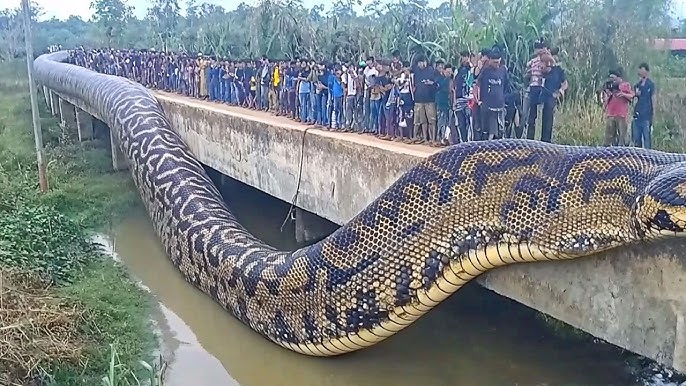
The announcement sent ripples across the scientific community and social media alike. Excerpts from the expedition feature in the upcoming National Geographic series Pole to Pole with Will Smith, further amplifying public fascination with Amazonian megafauna and underscoring the urgent need for wetland conservation on a global stage.
Splitting an Iconic Species
For centuries, herpetologists treated all green anacondas as a single species—Eunectes murinus—distributed widely across tropical South America. A pivotal study published in early 2025 revealed that this “one-size-fits-all” classification masked two genetically distinct lineages, separated by a 5.5 percent mitochondrial divergence and an evolutionary split dating back roughly ten million years—greater than the gap between humans and Neanderthals. Despite identical olive-green scalation and comparable body shapes, the northern and southern anacondas had diverged long ago, evolving in parallel within the Amazon and Orinoco basins. Only with modern DNA sequencing could researchers finally tease apart these cryptic species, prompting a wholesale revision of textbook snake taxonomy.
This taxonomic overhaul carries significant implications for wildlife management and conservation policy. Range-specific protections must now account for two separate species rather than a single pan-Amazonian giant, potentially affecting IUCN Red List statuses, CITES appendices, and habitat-protection frameworks across international boundaries.
The Northern Green Anaconda Revealed
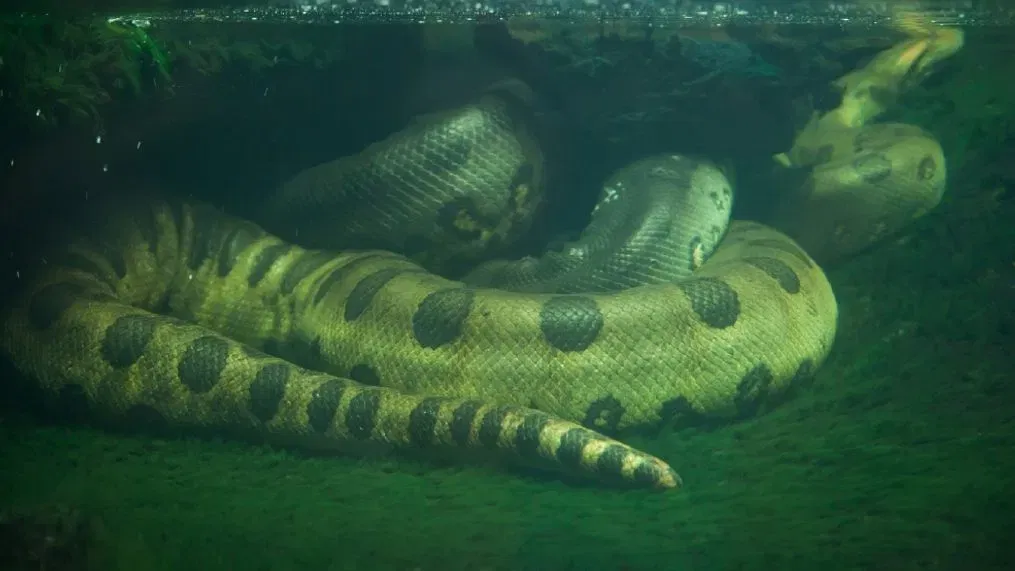
Eunectes akayima inhabits remote river channels from Ecuador’s Yasuni Basin through Colombia’s flooded savannas to Venezuela’s Orinoco wetlands. Verified records confirm individuals reaching at least 6.3 meters (20.7 feet), though eyewitness accounts from Huaorani hunters hint at even more colossal specimens lurking in secluded tributaries. Females consistently outsize males, an evolutionary strategy thought to maximize reproductive success: after a gestation of up to six months, gravid females can give birth to litters exceeding 80 live neonates, each measuring nearly a meter long at birth. These ambush predators exploit both land and water—remaining almost entirely submerged with only eyes and nostrils exposed—then striking with lightning speed when deer, capybaras, or caimans wander within reach.
Innovative survey methods have revolutionized how researchers study these elusive giants without harming them. Non-invasive genetic swabbing of sloughed skin and environmental DNA (eDNA) sampling from water bodies allow scientists to detect E. akayima’s presence across vast river networks. Combining these molecular tools with drone-mounted thermal cameras has accelerated population monitoring, minimizing disturbance to fragile wetland habitats.
Ecological Significance
As apex predators, northern green anacondas exert a profound influence on Amazonian food webs, regulating populations of fish, rodents, deer, and juvenile caimans through predation and competition. Their role as keystone species means that healthy anaconda populations uphold ecosystem balance: by culling overabundant herbivores, they help maintain a mosaic of wetland and forest habitats, which in turn supports insect pollinators, seed-dispersing birds, and myriad aquatic organisms. Researchers have noted that sites with robust anaconda numbers exhibit higher biodiversity indices and more stable nutrient cycles, illustrating the snake’s integral function in sustaining the Amazon’s ecological complexity.
Top Articles