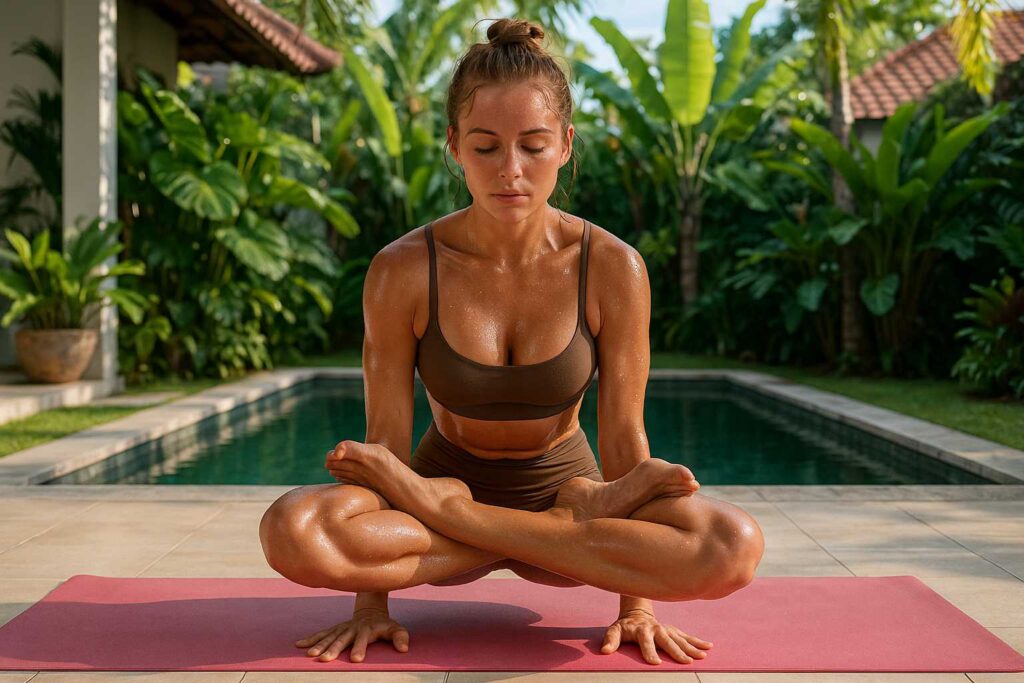
5. Eight-Angle Pose (Astavakrasana)

Why It’s Tricky: Now you combine a deep seated twist with a full arm balance, perched sideways.
Deep Dive:
- Seated Prep: From Dandasana, hook your right ankle over your left tricep, twist to the right, and slide the left leg under and over the right arm.
- Arm Balance: Bend elbows slightly, tuck both legs to one side, then straighten arms to lift the body.
- Balance Hack: Gaze forward and keep the shoulders stacked over your hands.
- Twist Benefit: You detoxify and massage abdominal organs—this is a full “clean-and-lift” for both body and mind.
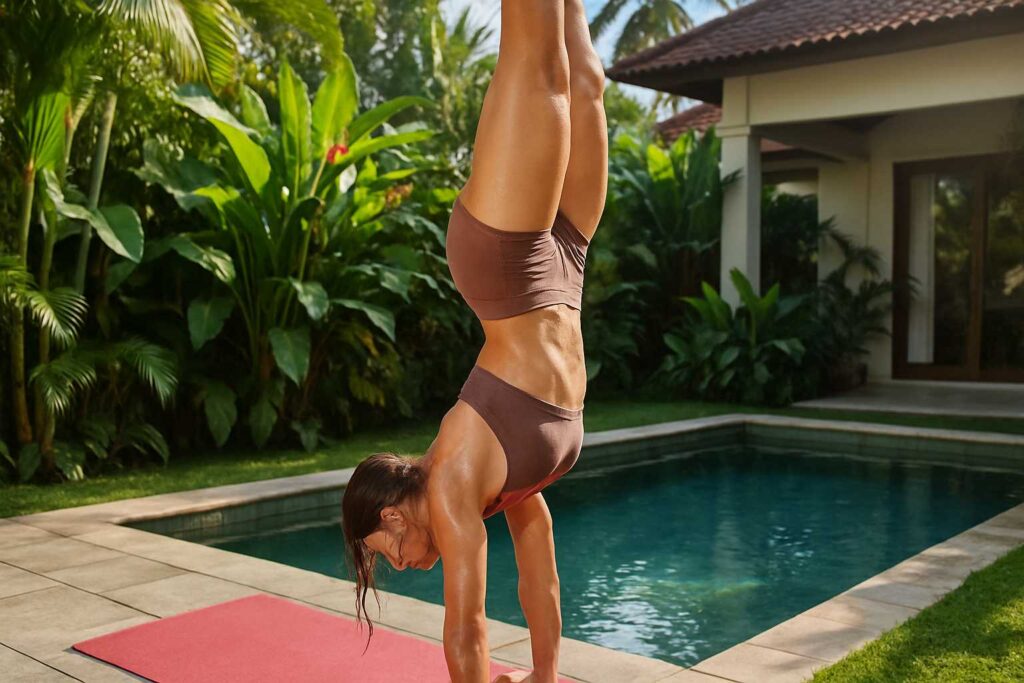
4. Lotus in Handstand (Tolasana → Adho Mukha Vrksasana in Padmasana)
Why It’s Next: You’re marrying full lotus’s intense hip opening with a classic handstand—two major feats in one.
Deep Dive:
- Ground Lotus Mastery: First, in seated Tolasana, lift both legs into lotus using core and arm strength.
- Wall-Assisted Handstand: From lotus, press into your hands, tuck chin, kick up toward the wall, and then straighten legs overhead.
- Micro-Adjust: Use fingertips to correct drift—handstand lotus is unforgiving of tiny balance shifts.
- Hip-Spine Connection: True openness in the hips prevents lower-back pinch; keep tailbone heavy and core active.
3. Handstand (Adho Mukha Vrksasana)
Why It’s a Leap: Now you remove all supports—no wall, no lotus, just you and gravity.
Deep Dive:
- Wrist Warm-Up: Credit again to wrist prep—circles, plank holds, and wrist stretches.
- Kick-Up Drills: From a lunge, plant hands shoulder-width, kick back knee up then the standing leg, finding micro-pauses to sense your balance threshold.
- Alignment Check: Spine long, ribs neutral, shoulders “squeeze” toward ears; avoid arching the lower back.
- Mental Shift: Handstands are 80% in the mind—turn your gaze slightly forward between the hands to steady the nervous system.
2. Scorpion Pose (Vrschikasana)
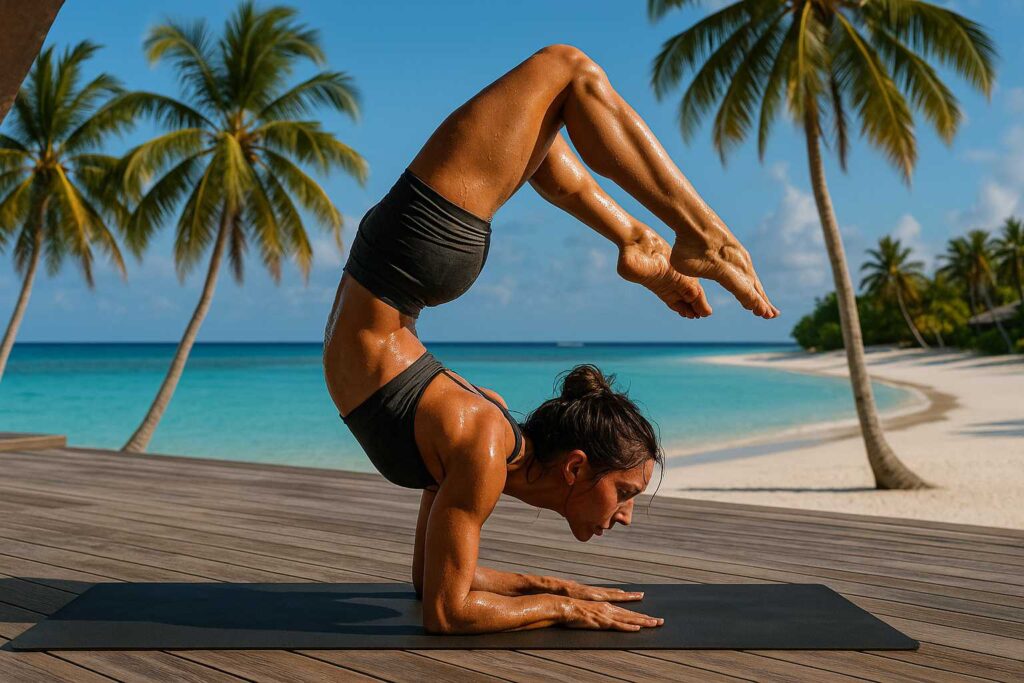
Why It’s Elite: A backbend perched on forearms, with bent knees reaching toward the head—think “flying scorpion.”
Deep Dive:
- Prep Sequence: Warm through camel, cobra, wheel, and forearm stand drills.
- Wall-Assist: Kick into forearm stand near a wall, then bend the knees, aiming the feet toward your crown.
- Spine Safety: Draw the lower ribs in and tailbone down to protect the lumbar spine—bend originates in the upper thoracic region.
- Breath Cue: Inhale to expand the chest, exhale to find more lift; keep breath audible and smooth.
1. Peacock Feather Pose (Viparita Mayurasana)
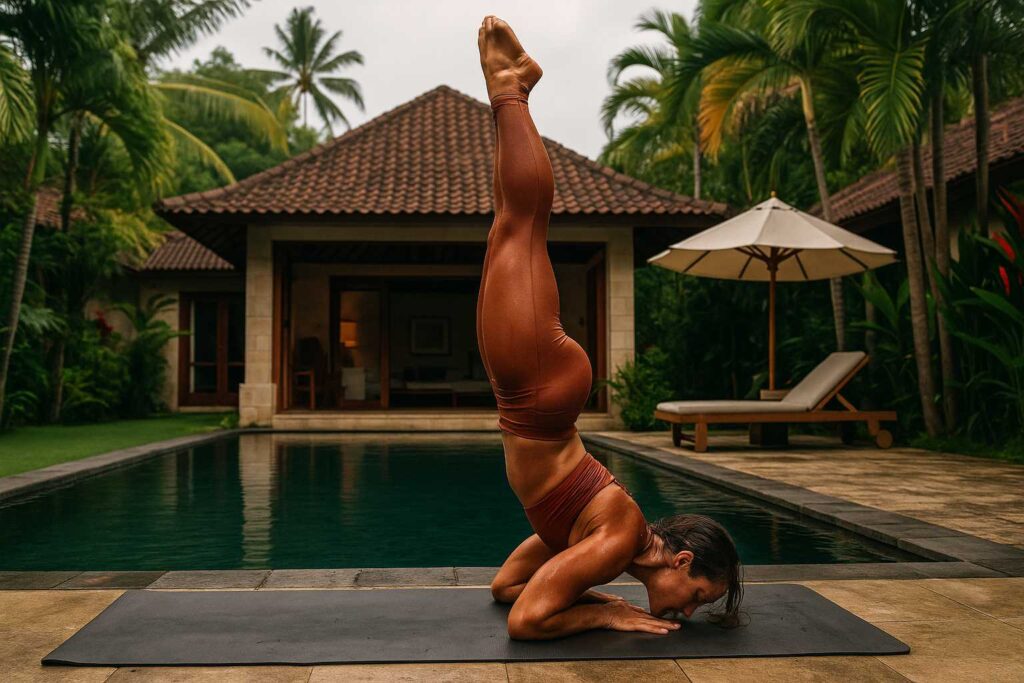
Why It’s the Hardest: Inversion, extreme backbend, and balance on head and forearms all at once—this is the summit of spine-opening inversions.
Deep Dive:
- Layered Build: Bridge → Wheel → Headstand prep → Dolphin headstand → full backbend.
- Head-Forearm Anchor: Crown of the head lightly rests on a fold of blankets; forearms do most of the bearing.
- Entering Slowly: From dolphin headstand, walk your feet closer, arch your spine, then bend the knees and let feet approach the ground behind you.
- Mindful Integration: This pose is as much energetic as physical—visualize a wave of prana (life-force) flowing in through your chest and out your back body.
A Gentle Reminder on Safety & Growth
- Progress Gradually: Master each prerequisite before moving on—these are not Instagram tricks!
- Props Are Friends: Blocks, straps, walls, blankets—use them without shame.
- Listen & Adjust: Sharp pain is your body’s “stop sign.” Slow down, back off, and seek guidance when needed.
- Consistency Over Crash Courses: These poses bloom over months (and often years) of dedicated, mindful practice.
Embrace each step as its own victory. Whether you’re wiggling toward that first leg lift in Hand-to-Big-Toe or finally finding your floating Scorpion against the wall, celebrate every moment of growth. Your strongest, most flexible self is just one breath—and one brave attempt—away. Namaste!
Top Articles